Pricing
Weekly Rental Pricing
In Propcart, weekly rentals are calculated using 7-day weeks plus one grace day.
This means:
- 1 week = 7 × 1 + 1 = 8 days
- 2 weeks = 7 × 2 + 1 = 15 days
- 3 weeks = 7 × 3 + 1 = 22 days
- and so on
This follows standard industry practice. If a customer picks up on a Monday and rents for one week, the return is due the following Monday—not Sunday. In other words, weekly rentals typically begin and end on the same day of the week.
Grace Days and Extensions
Each weekly rental includes one grace day, which is applied to the final return date.
When an order is extended, the original grace day is shifted forward to the new return date. Grace days are not cumulative; they do not stack with each extension. Only the final version of the order includes a grace day.
Example
- A one-week rental is picked up on Monday
- The initial return date is the following Monday
- The customer requests a one-week extension
- The new return date becomes the Monday after that
- The grace day moves forward with the extension, ensuring there is still only one grace day on the final order.
Why We Use Grace Days
Grace days are built into weekly rentals to reflect how accounts actually work in the real world.
Pickups and returns rarely happen at the exact same hour, and schedules often shift due to transportation, call times, or last-minute changes. The grace day provides a small buffer so customers aren’t penalized for reasonable timing differences.
This system helps:
- Reduce unnecessary late fees
- Keep weekly rentals aligned to consistent weekdays
- Make scheduling simpler for both customers and prop houses
- Match common practices across the film and event rental industry
By including a grace day in each weekly rental, Propcart helps ensure pricing stays fair, predictable, and easy to understand—without requiring constant manual adjustments.
Line Item Pricing
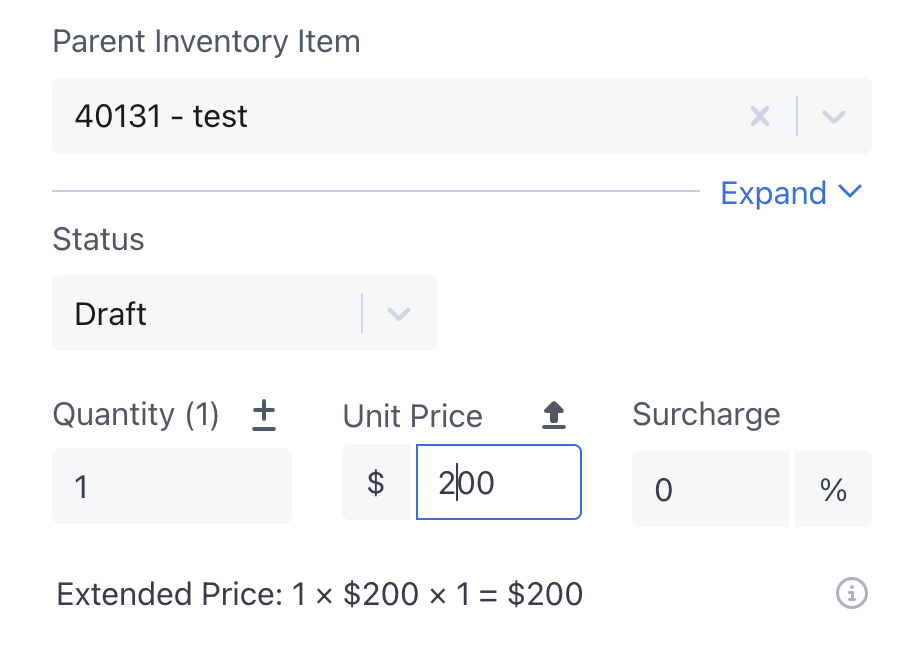
For inventory Line Items, the default Unit Price is inherited from the inventory item.
You can edit the line item price without affecting the inventory item price; the edited price will only affect that line item on the current order.
To save the edited price back to the inventory item, click the Update inventory item price icon next to the Unit Price field. This doesn't work for generic items, and a replica item's price has to be changed on its master item.
Credit Card Fee
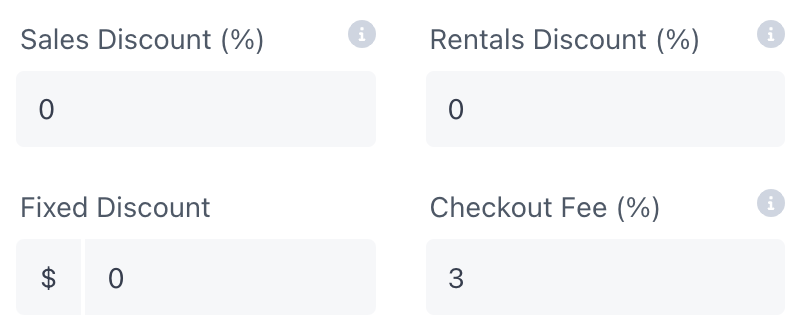
On an order's Billing tab, there is a Credit Card Fee field which adds a post-tax surcharge like a credit card processing fee. It is limited to 10% of the order. Most Credit Card Fees are around 3%.
The fee is a percentage of the order total including sales tax, and Propcart then adds sales tax to the fee itself at the order's tax rate. Quotes and invoices label it Credit Card Fee (3% + Tax).
New orders get a default Credit Card Fee from the Credit Card Fee field in your Order Settings:
- With Apply Credit Card Fee to all Orders? on, every new order gets that fee.
- With it off, only orders for accounts whose Preferred Payment Method is Credit Card get it. All other orders start at 0%.
If you change an order's account and its Credit Card Fee doesn't match that rule, you're asked whether to change it.
This is not tax advice. Check with your accountant to confirm adding a credit card processing fee is legal in your area.
The Credit Card Fee is listed on its own line on Quotes, Deposit Requests, Invoices and the webstore page where a customer confirms a quote. Checkout Sheets include it in the balance.
How to calculate your Credit Card Fee when using Stripe
This is not tax advice. Check with your accountant when determining your tax obligation on credit card surcharges and processing fees.
To match Stripe's 2.9% processing rate, enter 2.9 as your Credit Card Fee.
Don't add sales tax to the percentage yourself. Propcart already charges sales tax on the fee, so a percentage that includes tax gets taxed twice.
Example
Let's say you're operating in Burbank, California, your sales tax is 10.25%, and an order totals $1,000 including tax. With a Credit Card Fee of 2.9%:
Credit Card Fee = $1,000 × 0.029 × (1 + 0.1025) = $31.97
That's the $29.00 fee plus $2.97 of sales tax on it, so the customer pays $1,031.97.
If the order's tax rate is 0%, no tax is added to the fee.
A 2.9% Credit Card Fee comes close to what Stripe charges, but doesn't cover it exactly. Stripe also takes a fixed fee per charge (30¢ in the US) and takes its percentage from the Credit Card Fee too. And 2.9% is Stripe's standard US card rate; check Stripe's pricing for the rates in your country.
Extended Price
A line item's extended price is calculated as follows:
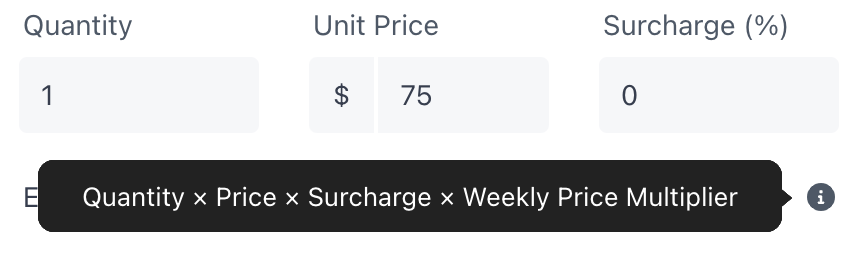
Quantity x (Unit Price + Accessory Kit Price) x Surcharge x Price Multiplier x On Spec Rate = Extended Price
The Price Multiplier depends on the line item's purchase type:
- Weekly Rental, Digital Rental and Print to Size: set by your weekly Discount Schedule
- Flat Rate Rental: the number of weeks
- Daily Rental: the number of days
- Per Use Rental, sales, services and Loss & Damage line items: 1
The On Spec Rate applies only on "On Spec Rental" orders, to line items returned within your On Memo / On Spec Duration (days) from Order Settings. Otherwise it's 1.
Loss & Damage line items use their L&D Price in place of the Unit Price.
Surcharges
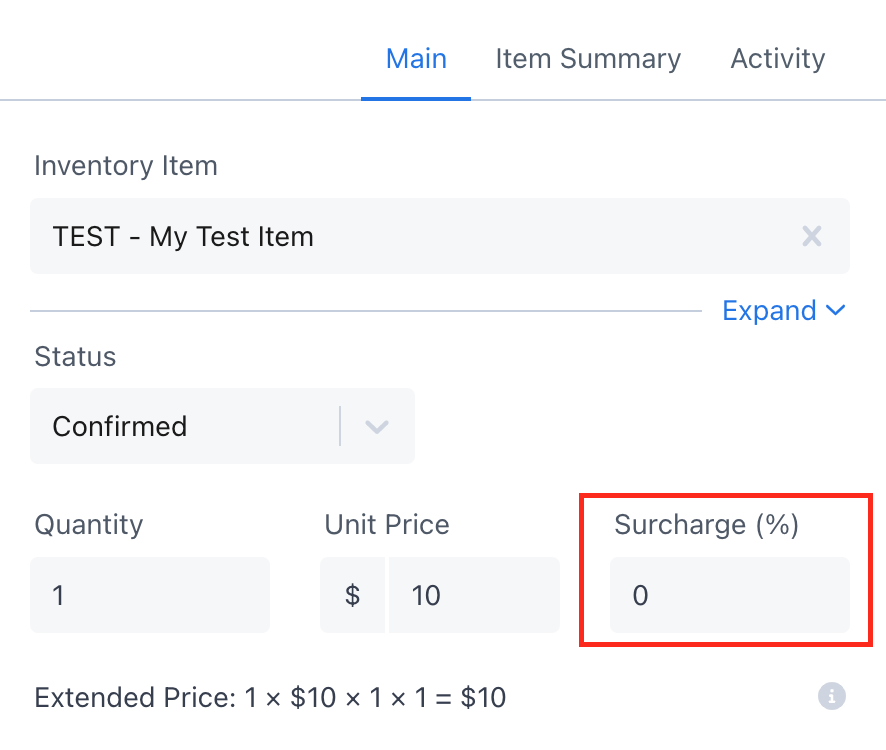
The Surcharge field allows you to raise a line item's price a given percentage without the surcharge appearing on any customer-facing paperwork. Paperwork shows only the marked-up rate and amount, including on bundle component rows.
A surcharge can be added to individual line items:
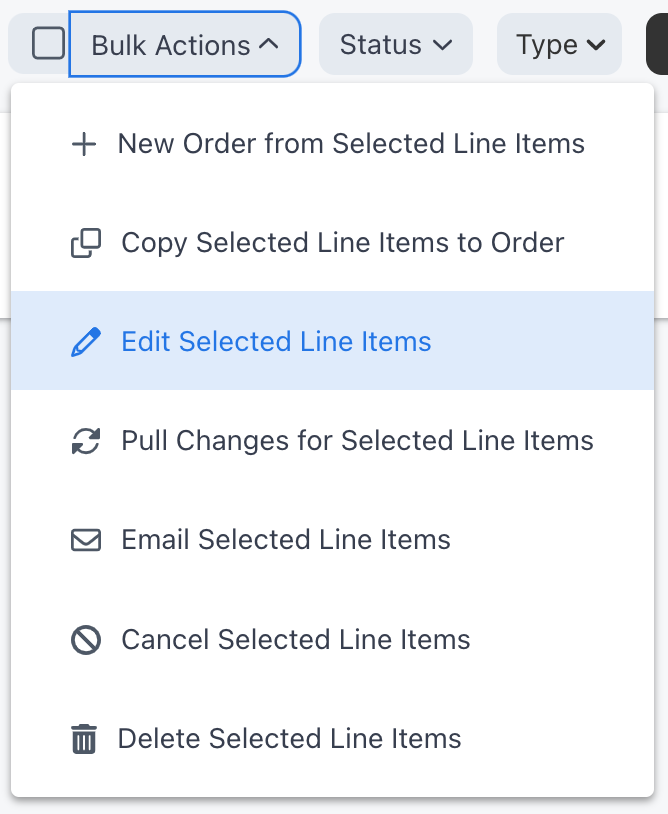
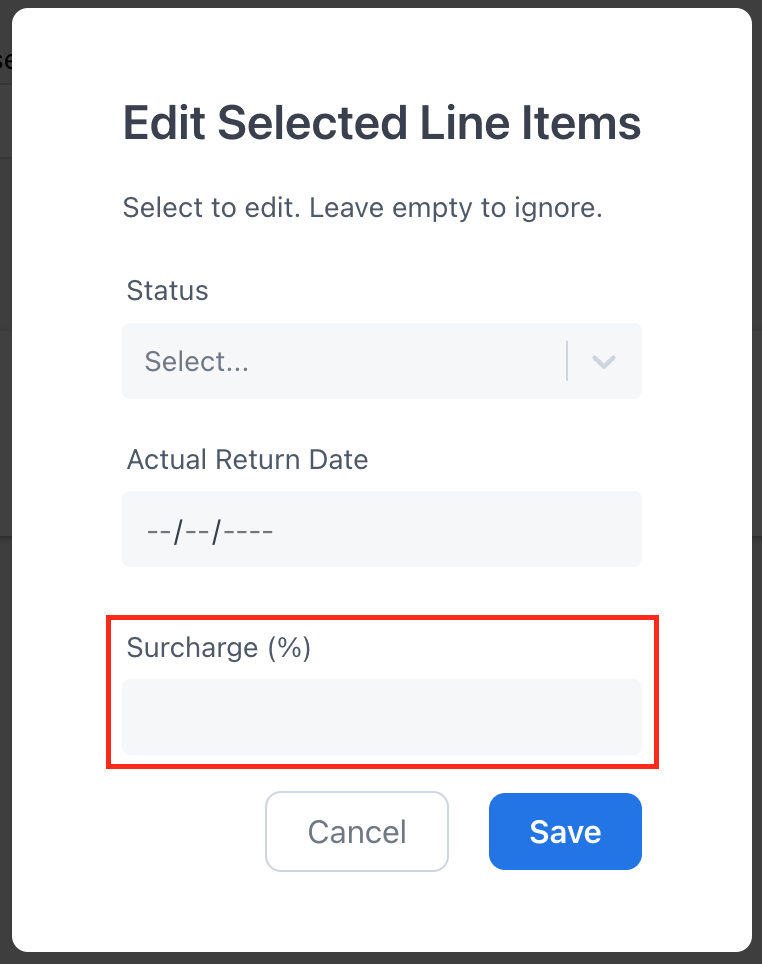
Or as a bulk action using the "Edit Selected Line Items" option:
And then adding a percentage markup to the Surcharge (%) field:
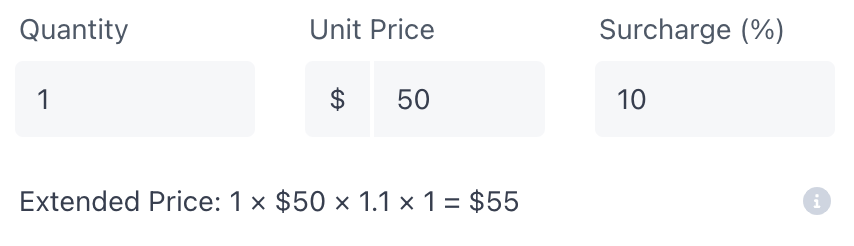
In the following example, a Surcharge of 10% raises the price of a $50 line item $5, so it's now $55.
If you forget how the Extended Price is calculated using the Surcharge, you can hover over the tooltip:
Why would you want to add a surcharge?
- The customer is being difficult and you want to charge him more for the extra trouble.
- The customer asks you to hide some L&D costs in the current order without creating a separate L&D order.
- The order is for an event, and you charge 50% more for events because they're extra work.
- The customer is paying via credit card and you want to invisibly pass on the 3% transaction fee to the customer without using the order's
Credit Card Feefield (which is visible on the paperwork).
Taxes
Configure your Tax Regions and Default Tax Region in your Account Settings.
You can then select a Tax Region for your order on its Billing tab.
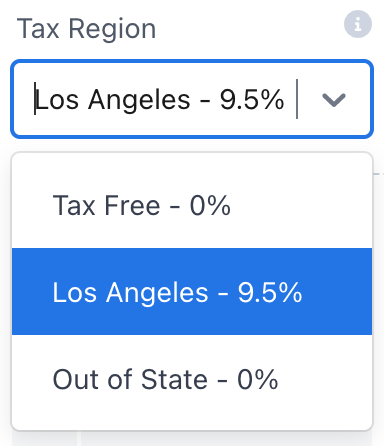
The taxability of an inventory line item is inherited from its parent inventory item.
Per Use Rental Pricing
Recall the Multi Week Discounts where a line item's extended price is automatically calculated for multi week orders.
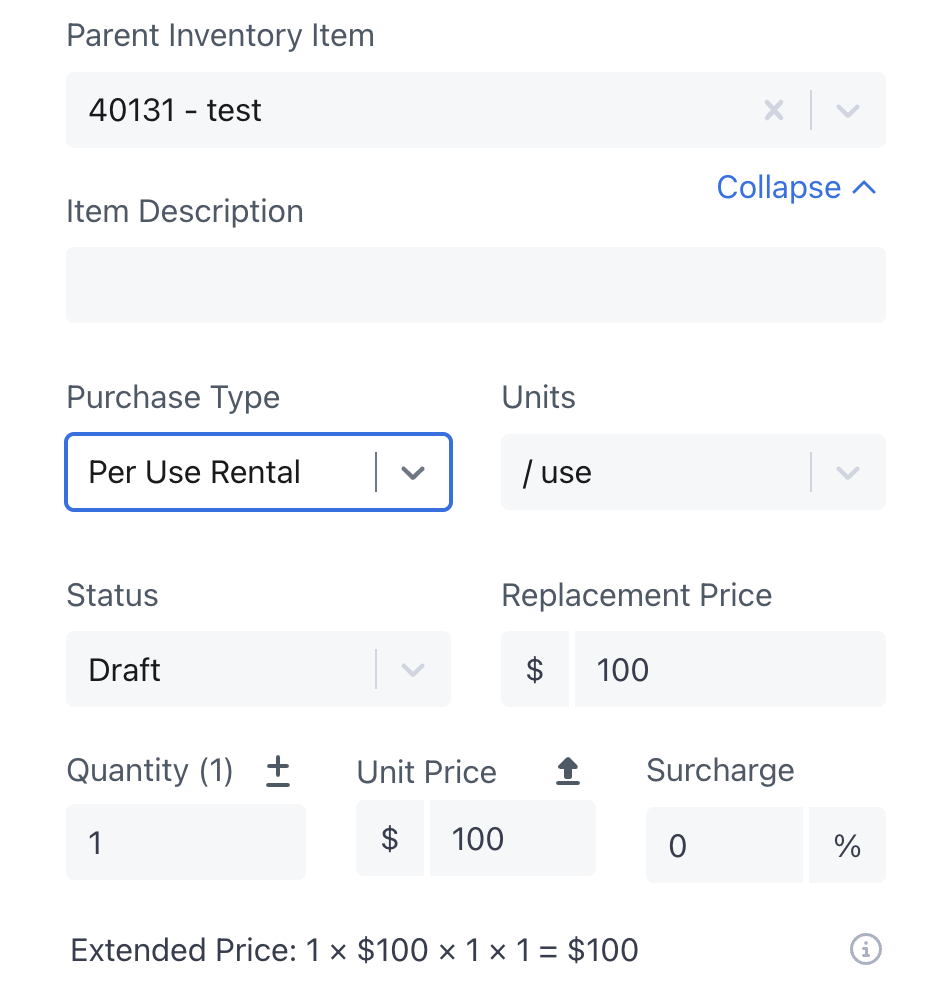
Sometimes you might want to override a specific line item's extended price from being automatically calculated based on its billable duration, and instead set a fixed price for the entire duration of the order. We call this "Per Use Rental" pricing.
To change a line item to per use rental pricing, open the line item and
- Click the Expand Button
- Change the Purchase Type to
Per Use Rental - Adjust the
Unit Priceto be the price you want for the duration of the order
FAQs
How do I add a rush fee?
If you want to make the rush fee invisible, use the Surcharge feature.
If you want to make the rush fee visible, DO NOT use the Credit Card Fee, which is intended for credit card processing fees.
Instead, create an Inventory item titled "Rush Fee" with a purchase type of "Service" and a $0 price and (maybe) non-taxable (check with your accountant).
Add that "Rush Fee" item to the order and then change the line item price to be whatever you want. There's no option to make it a percentage of the order, so you'll have to calculate that manually.